Nanga Parbat Expedition
Nanga Parbat is located in the Northern Areas of Pakistan and is the Western bastion of the Himalaya. It is the nineth highest mountain in the world and the second highest in Pakistan after K2. Steeped in a history matched by few others in Asia it has staged some of the greatest Himalayan ascents of all time. From Hermann Buhl’s solo first ascent in 1953 via the Upper North ridge to Gunther and Reinhold Messner’s first ascent of the Rupal Face in 1970 via the South South East Spur, Messner’s solo climb of the Diamir Face in 1978, and more recently Vince Anderson and Steve House’s Alpine-style ascent of the Central Pillar of the Rupal Face. These epic climbs continue to inspire climbers to attempt yearly what is considered to be the second hardest 8000m mountain after K2.
Nanga Parbat is a truly awesome spectacle. The south face is the largest in the world extending over four kilometres above base camp. To date there have only been five ascents from the south. Nanga Parbat means "Naked Mountain" in Hindi/Urdu and is with reference to the south face's exposed rock buttresses. The north face is equally intimidating. In contrast to the south face’s steep rock and ice the snowy north face is guarded by a broad barrier of seracs that extend the width of the mountain. Climbers before the Second World War were convinced that the only way to climb the mountain was from the north via a long arc extending over Rakhiot Peak (7010m), between the two summits of Silberzacken and finally to the summit of Nanga Parbat thereby avoiding a more direct ascent of the north face. The route was dangerously prone to avalanche and exposed to bad weather. 31 people died attempting to climb the mountain leading to it acquiring the infamous name of the “Killer Mountain".
Nowadays it is not such a killer and there are other peaks that could inherit the nickname (eg Ultar or Batura I). Hermann Buhl’s summit route has only been repeated once (Slovak, 1971) to this day. His ascent marked only the third 8000m ascent after Annapurna I (1950) and Everest and was the only first summit of all the 8000ers to be done without oxygen and of course solo. Most attempts nowadays are via the Westerly Diamir face which is generally considered to be the easiest and safest with the Kinshofer Route the normal route. Nanga Parbat as of 2005, had received 263 ascents by 261 individuals (Messner and SP Member Qudrat Ali have climbed it twice) at a price of 62 deaths. Sixteen women have summited the mountain.
Numerous challenging lines still await. The most difficult is an ascent of Nanga Parbat via the unclimbed Mazeno Ridge which constitutes the longest ridge in the world. A number of expeditions have made ‘attempts’ on the mountain during winter but to no avail.
Trip Facts
Country: Pakistan
Duration: 50 Days
Minimum Altitude: 540 m / 1,770 ft (Islamabad)
Maximum Altitude: 8,125 m / 26,657 ft (Summit of Nanga Parbat)
Walking Per Day: Approximately 4–7 hours (longer during approach and descent)
Nature: Trekking, Glacier Travel, High-Altitude Mountaineering & Camping Expedition
Grade: Extremely Challenging / Expedition Level
Best Season: June–July (Summer Climbing Season)
Itinerary:
Day 1
Arrival in Islamabad
Arrive in Islamabad and receive a warm welcome. A reception is hosted at the Alpine Club of Pakistan, where you meet officials, expedition leaders, and fellow climbers. Overnight at the hotel.
Day 2
Islamabad (Ministry Briefing)
Attend the official expedition briefing at the Ministry of Tourism. Permits, documentation, and final administrative formalities are completed. The remainder of the day is free for rest and final checks.
Day 3
Drive to Chilas (Karakoram Highway)
Drive by coach along the legendary Karakoram Highway to Chilas, covering approximately 480 km. The journey offers dramatic views of river gorges and mountain landscapes. Overnight stay in Chilas.
Day 4 - 5
Drive to Halale & Trek to Diamir Base Camp
Continue by jeep to Halale, the roadhead for the Diamir face of Nanga Parbat. From here, begin trekking toward Diamir Base Camp through rugged terrain and alpine valleys. Camps are established en route before reaching Base Camp.
Day 6 - 45
Acclimatization & Climbing Period
This extended period is dedicated to acclimatization rotations and the ascent of Nanga Parbat (8,125 m). Climbers establish higher camps, fix ropes, and make multiple rotations to adapt to altitude. Weather windows are closely monitored, and the summit push is made when conditions are favorable.
Day 46 - 47
Descent to Halale & Drive to Chilas
After completing the climbing phase, descend from Base Camp back to Halale. Continue by jeep to Chilas, marking the end of the mountain section of the expedition.
Day 48
Drive to Islamabad
Return to Islamabad via the Karakoram Highway. Transfer to the hotel for rest and recovery after the expedition.
Day 49
Farewell at Alpine Club of Pakistan
Attend a farewell meeting at the Alpine Club of Pakistan, celebrating the completion of the expedition and sharing experiences with fellow climbers and officials.
Day 50
Final Departure
Transfer to the international airport for your onward journey home, concluding the Nanga Parbat Expedition.
Includes:
Base camp service
- Arrival & Departure : Airport transfers-Airport/Hotel/Airport
- Hotel In Islamabad : 4 nights in Islamabad 4 star Hotel on bed & breakfast Basis-Double Room
- Member transportion : Islamabad –Chilas by bus, Chilas to halale by jeep,Halale to Chilas by jeep and Chilas to Islamabad (by bus ) Member and Staff.
- Transportation : Necessary all equipment Transportation for all Member and Staffs From Islamabad –to chilas by bus chilas to halale(by jeep) –Base camp(by Porters)- base camp to halale(by porters) Halale to chilas (by jeep) chilas to Islamabad by bus
- Permit : Nanga parbat expedition permit , National park fees
- Garbage Management : Stool Shipment Transfer & Garbage Deposit fees
- Lodging & Fooding : Food 3 meals a day in Trekking & Base camp for member & Staffs
- Cargo Clearance : International Air cargo clearance of Member Personal Luggage & Payment of Government taxes
- Liaison Officer : 1 Government Liaison officer with full equipment, salary, accommodation
- Base Camp Staff : Base camp Cook & Kitchen Helper
- Porter : Porters per member up to Base camp & Porters return from Base camp
- Staff Salary and allowance : All staffs & porters daily wages, equipment, food & clothing
- Insurance : All Staffs Medical & Emergency rescue Insurance
- Member Luggage : 60 Kg per member for personal baggage
- Base Tent : VE25 North face or Kailas tents for base camp for per member
- Base Base equipment : Base camp foam mattresses, dinning, Kitchen, Toilet & Store tents, hot shower, Tables & chairs & Cooking gears
- Heater : Heater for base camp in each Dining and other necessary camp
- Light : 1 Solar panel for battery charge and light at base camp for use.
- Dinner : one Farewell Dinner in tourist standard restaurant in Islamabad with Staff
Full board service
- Oxygen : (O2)-Poisk cylinder: 02 oxygen bottle for each member and 01 oxygen bottle for each high altitude Sherpa
- Mask & Regulator : 1 Set of top Out mask for each member and high altitude Sherpa
- Permit : Satellite Phone /walkie talkie Phone if necessary in basis of Member
- High Altitude Climbing Sherpa : 1 Climbing Sherpa per member and Climbing Bonus
- High camp service : Necessary cooking gas, cooking pot for member, high altitude tent, high food and fixing gear (C1) (C2) (C3) (C4)
Exclusion:
- Lunch & Dinner : Lunch & dinner in Islamabad Hotel stay and more then 4 nights in Islamabad Hotel
- Insurance : Travel and high altitude insurance ,accident, medical & emergency evacuation
- Personal Expenses : Telephone, Internet, Laundry, any Alcoholic beverages, personal equipment and shopping
- Pakistan's Visa : Pakistan visa should take into your home country or should take visa and pays fees upon arrival as per the rules and regulation of Pakistan Government.
- Sherpa summit Bonus & Tips : Sherpa Summit bonus US$1000, please calculate some tips
- Rescue Evacuation : Emergency rescue evacuation cost, if needed and all other personal nature expenses

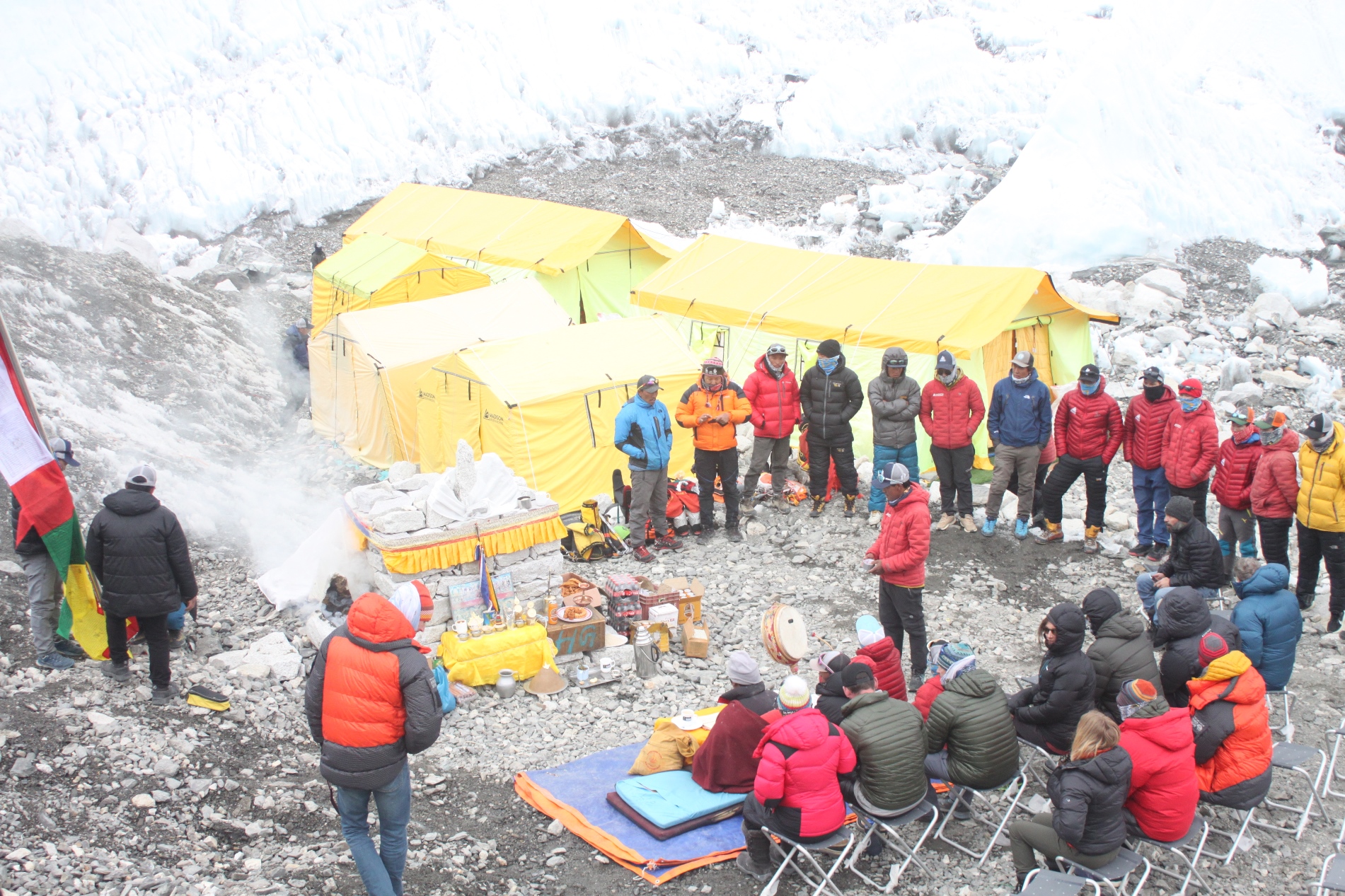
Kenton Cool for making history with his 20th successful ascent of Mount Everest—an extraordinary milestone and a new record among foreign climbers!
Read More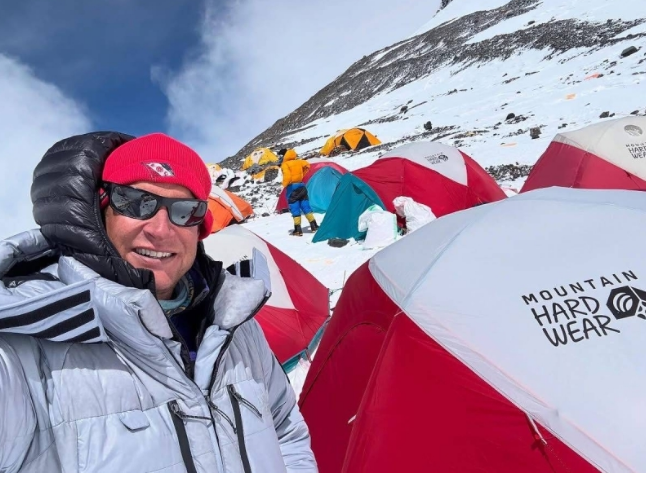
Congratulations garrett Madison scales Everest for 15th time, second-most summits by non-Sherpa. Organized by Himalayan Guides Nepal, They successfully reached of Mount Everest (8,848.86M),
Read More
Congratulations on your 19th Everest summit Under the HG Everest Expedition 2025, organized by Himalayan Guides Nepal, they successfully reached the summit of Mount Everest (8,848.86 meters),
Read More
congratulations to Mr. Kenton Cool on achieving his 19th successful summits Mount Everest (8,848.86 meters), (Kenton Cool is the only foreigner who summited Everest for the 19th time this season)
Read More